We know the full extent of our disaster. What else could surprise the stockmarket? On this rationale, the stockmarket won’t tank, though it may not boom. Our favorites are perking up — Apple, Google, EWA, EWZ, ECH and special situation stocks like Nuance (rumors of takeover). I remain optimistic. But I’m also aware of what’s being written…
A double dip (i.e. W) recession? Professor Roubini (“Dr Gloom”) now thinks the risks of a double-dip recession in the United States are rising. The following content is excerpted from that analysis, the full version of which is available for paying clients on Roubini.com, (which is not suffering a recession, but in fact is booming as new clients rush to pay for the gloom. This gives perversity a whole new meaning.) Now to Roubini:
V, U and W
A slew of poor economic data over the past two weeks suggests that the U.S. economy is headed for a U-shaped recovery—at best—in 2010. The macro news, including data on consumer confidence, home sales, construction and employment, actually suggests a significant downside risk even to the anemic levels of growth which RGE forecast for H1. The U.S. faces continued challenges in H2—particularly as historic levels of fiscal stimulus fade—and appears far too close to the tipping point of a double-dip recession.
This is not the conventional wisdom. Heated debate continues to rage in the United States on whether the economic recovery will be V-shaped (with a rapid return to robust growth above potential), U-shaped (slow anemic, sub-par, below trend growth for at least the next two years) or W-shaped (a double-dip recession). The V camp includes distinguished research groups and individuals such as Ed Hyman’s ISI, Larry Meyer’s Macroeconomic Advisors, the research group of JP Morgan, Michael Mussa and others. The U camp includes—among others—Roubini Global Economics, Goldman Sachs’ U.S. economic research group, PIMCO and Ken Rogoff. As early as August 2009, I worried in a Financial Times op-ed about the risk of a double-dip recession even if our RGE benchmark scenario characterizes the risk of a W as still a low probability event (20% probability) as opposed to a 60% probability for a U-shaped recovery. Others concerned about the double-dip risk include also David Rosenberg, Gary Shilling and John Makin.
Ed Hyman and I debated whether the recovery would be U or V-shaped on a February 22 conference call attended by over 2,200 listeners. Since that call, a slew of new U.S. macro data have come out. They have been almost uniformly poor, if not outright awful. Consumer confidence, based on the Michigan survey, has tanked. On the real estate front, new home sales are collapsing again, existing home sales are also falling sharply, and construction activity (both residential and commercial) is sharply down. Durable goods orders are down, initial claims for unemployment benefits remain stubbornly high (way above the 400K mark). Real disposable income for Q4 has been revised downward while real disposable income (before transfers) for January was negative again. The manufacturing ISM index—while still expanding being above 50—has now fallen a couple of notches and its production and new orders index levels are falling, too; and global PMIs suggest a loss of momentum in the global economic recovery. Real inventories look unchanged in Q1 relative to Q4; auto sales were at best mediocre; core CPI was falling and core PCE was close to 0%, suggesting anemic demand and economic weakness. Q4 GDP growth was revised upward to 5.9% but most of it (3.9%) was due to inventories; final sales grew at a 1.9% rate while consumption grew at a dismal 1.7% (down from 2.8% in Q3). Q3 growth has been revised from an initial 3.5% to 2.8% to 2.2%, with final sales growing only 1.7%. So, at the time of maximum policy stimulus (H2 of 2009), final sales were growing only at a pathetic 1.8% average rate.
The eurozone (EZ) debt crisis, which RGE discusses in depth in a major new paper, predisposes Europe to a rising double-dip risk, due to the wave of fiscal austerity sweeping the periphery of the EZ. Even if the EZ doesn’t enter a double dip, the growth of domestic demand there will be as or more constrained than in the United States. This, in turn, will be a drag on the potential for U.S. export growth. The U.S. dollar rally on risk aversion reflects this risk. The U.S. dollar is settling back down and the threat of a debt crisis is headed off by a stronger Greek fiscal adjustment and potential adjustment package. But fiscal spending cuts, confidence hits and the looming threat of either rising unemployment or falling wages in the public sector—on top of private sector retrenchment—will remain. A similar retrenchment may well lie ahead in the United Kingdom, given rising fiscal sustainability concerns and the threat of a sterling crisis. Europe then will have great difficulty being a source of demand for U.S. exports, and may even provide impetus to faltering global demand growth, contributing to the threat of a wider double dip across high-income countries.
What does all this mean for stocks and bonds? For this, we turn to Richard Russell:
March 9, 2010 – Can you have your cake and finance it too? Europe is about to find out. Europe is largely socialistic. European nations provide cradle-to-grave for their citizens. Taxes in Europe are generally high to pay for this largesse, but the worldwide recession has caused problems for the so-called PIIGS Nations, which include Portugal, Italy, Ireland, Greece and Spain.
Perhaps worst off is Greece, which is tottering on the edge of bankruptcy. The question is — will the leaders, Germany and France, bail out Greece? So far Angela Merkel, German’s tough Chancellor is living up to her reputation — being tough and very pro-German. Most of the PIIGS got into trouble by providing too-generous social services while at the same time having built up far too much debt. In other words, their citizens were enjoying the goodies without being able to pay for them.
The newspapers and magazines are chock full of descriptions and discussions of the world’s problems and, of course, the US’s problems. And, of course, the stock and bond market are fully aware of the problems.
If so, why is the stock market marking time and why are the bonds holding up. I think the answer is that the markets are putting impending trouble three at to five years away. My experience tells me that when the “experts” are putting the next “danger period” year into the future, watch out. The problems will be closer than anyone is thinking. OR — the market may be starting to discount trouble NOW.
The Greek mess started when Greece reported to the European Union that its budget deficit would be about 12.7% of its GDP (the EU rule is that budget deficits must be 3% or less of GDP. Incidentally, the US budget deficit will be about 11% of US GDP. But the US has one huge advantage, the US along can print the paper which its debts are denominated in. This is why the reserve status of the dollar is so critical to the survival of the US. Should the US lose is reserve status, the result would be an economic collapse.
Which may explain the cautious or reluctant action of the stock and bond markets.
I’m very concerned with economics and business, but my main job is dealing with the markets. Along these lines, a very important test may be at hand. The D-J Transportation Average recorded its high for this rally on January 11, 2010 at a price of 4262.86. As I write one hour after today’s opening the Transports are trading at 4267.80. In other words, the Transports are just are few points from advancing to a new high.
At the same time, the D-J Industrial Average recorded its high closing for this advance on January 19 at 10725.43. As I write the Industrials are 10586. This puts the Industrials 139 point below their January 19 peak. If the Transports close at a new high today above 4262.86, we will have a definite Dow Theory non-confirmation.
I’m asked whether it makes any difference whether the Dow or the Transport refuse to confirm. The answer is that according to Dow Theory it makes no difference which Average fails to confirm. A non-confirmation is a non-confirmation regardless of whether it’s a result of a Dow or a Transport failure.
Gold — There is talk of the Chinese holding off any new gold buying. This has caused a minor sell-off in the yellow metal. Today as I write April gold is down over 2.20 points. But silver is up as are CEF and GDX. NEM is higher, and Newmont’s earning are now surging.
Google’s Translate — its latest brilliance. You don’t want to hear about the zillions of hours or the millions of dollar invested. Suffice Google Translate is now the best translation on the web. Better yet, it’s free and completely devoid of commercials. Here’s what I just wrote in Vietnamese:
Google Translate – sáng chói nhất của nó. Bạn không muốn nghe về zillions giờ hoặc có vốn đầu tư hàng triệu đô la. Đủ Google Translate bây giờ là bản dịch tốt nhất trên web. Tốt hơn, nó hoàn toàn miễn phí và tránh các quảng cáo thương mại.
Here’s it in Arabic (in case you care):
جوجل للترجمة — في أحدث تألق. كنت لا تريد أن تسمع عن zillions ساعات أو الملايين من الدولارات المستثمرة. يكفي مترجم
جوجل الآن افضل ترجمة على الويب. الأفضل من ذلك ، انها حرة وخالية تماما من الإعلانات التجارية.
Read more about Google Translate, click here.
California is bankrupt. You don’t have to read the financial press. You just have to stand in line to pay your ticket at the local court house in Indio, California. As we all waited in line, I got everyone to tell their story. Several people got a ticket for not stopping long enough at a stop sign. Read that again: They stopped. They didn’t do “a rolling stop.” They didn’t stop long enough. So how long are you meant to stop? No one knew. Someone guessed five seconds. Another 30. One said a cop told them they had to stop long enough for a policeman to put his hand under the car’s front tire, wait a second or two and then remove it. (Remember I don’t make this stuff up.)
A man between 85 and death got a $200 ticket for turning left against a Do-No-Turn-Left sign. He checked the intersection carefully and swears there’s no Do-Not-Turn-Left sign.
My friend got caught in a speed trap for doing 40 in a 25 mile zone. His Illinois registration was out of date. So the cop impounded his car — i.e. took it away — and left my friend and his passenger stranded on the side of the road, along with two sets of golf clubs. For that horrid crime, California charged my friend $277 storage on his impounded car, $150 to the Sheriffs Department for their trouble (he doesn’t know what trouble). $477 for the speeding fines. $54 for mandatory traffic school plus $40 for an online traffic school test which my friend must past.
Another victim took his innocence to the Judge. He proved to the Judge conclusively that the cop had his facts all wrong. The Judge said, “sorry, but he had to go with the policeman. Pay the fine.”
One street vendor got fined $400 because one ear of corn was missing a piece of plastic. The vendor told me the plastic slips off in the hot water.
No one complained. They all accepted the fact that their crime had nothing to do with them. They were just part of a way for the state to get money. They all intoned, “California is bankrupt.”
Please be careful driving in your state. California is not the only state that’s bankrupt and desperate. It’s just the most bankrupt and the most desperate.
How about my son’s latest indignity? Here’s the background to this evil story. He moved from New York to Portland, Oregon. He took his New York cell phone with him, because he wanted his friends to find him. He got screwed. Read on:
This is infuriating but…. cellphone carriers tax their customers based on their customers’ area codes and not billing address. What this means is that Claire (his sister who lives in Boston) and I are paying the highest cellphone taxes in the country despite living in lessor tax regions.
New York is: 16.23%, Total Cell Phone Tax: 21.71%, Rank: 1 (THE WORST)
Massachusetts:5.63%, Total Cell Phone Tax: 11.11%, Rank: 42
Oregon: 2.27%, Total Cell Phone Tax: 7.75%, Rank: 48
For me, this means that I am paying an extra $134.02 per year for the privilege of having a NY area code over an OR area code.
Infuriating but I won’t give up my 917 number.
He’s been negotiating with Verizon and is looking at shifting to T-Mobile. More on this engrossing story. Anyone got any ideas?
Thanks to reader Stephen Gornick. He’s the software genius that Michael, my son, and I are not. Mr. Gornick solved the column width problem, which truncated some of my larger graphs, charts and images. He provided us with great software code. Thanks again.
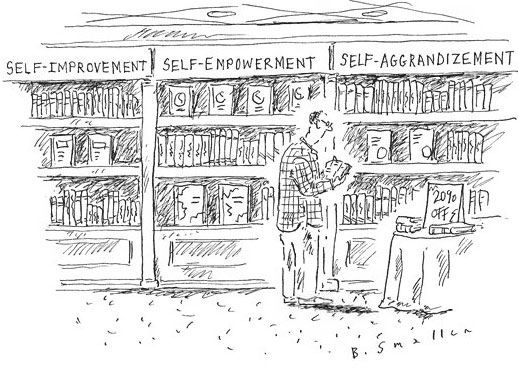
New skills to acquire. (courtesy New Yorker.)
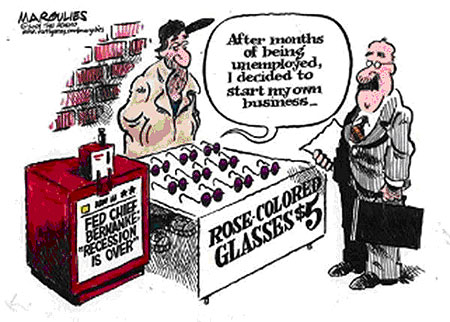
New business to start:
New profession to learn:
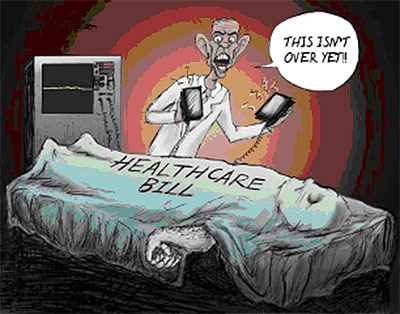
Let me make myself clear: Health care desperately needs reforming. The emergency room is an expensive way to provide healthcare to the uninsured. The system is being ripped off and gamed by doctors desperate for a fair, intelligent system. Reform needs to come slowly, with deliberation and thought. This proposed massive bill is not the way to go. It’s too expensive. And there will be too many ghastly unintended consequences. What a strange world. Remember Bush? He got more done on healthcare than the present healthcare-obsessed administration.

Harry Newton, who’s ecstatic that the sun has finally come out. The tennis courts are dry. And there are a massive number of players who are able to beat me, hence keeping my ego in check and making me increasingly despair for a better, stronger backhand.

Hi Harry
Fabulous! The new formatting change is great. This time you got it!
Not only can I see the charts, cartoons, etc corectly at 1024×768…the Control-Minus works as well. Everything got smaller, and fits in the window, yet is all still readable.
But as a bonus: All of the archived articles now work as well!
Congratulate my son Michael. He's a genius.
I know this for a fact, because he told me so.
Apropos the cell phone dilemma, switch to an Android phone and Google Voice, buy the smallest voice plan you can (since you'll never use the minutes). It's free. Michael can get a 646 area code (NYC), but since it's free, there are no taxes. It will take his friends all of 5 minutes to reprogram their phones with his new number. And the rest of Google Voice has wonderful features, especially its voicemail, but also its call management features.
Thanks, I have considered many options including Google Voice. Unfortunately, there a few reasons other than making a lot of people reprogram their phones that keep me from switching numbers. What I am waiting for is the day when I can port my 917 number to Google Voice and then get a local Portland number which Google Voice will point to. Or better yet, get a local Nevada number, which has the lowest taxes in the country. Google says that porting numbers to Voice will be available at some point in the future but it doesn't say when. For now, I am keeping my fingers crossed and looking for other solutions.