No market can survive the fear and the doubt. Gold will benefit. TIP is also doing well and paying a handsome yield. Some muni bonds are cheap. Other than that your guess is as good as mine.
When in doubt, stay out.
Today’s New York Times sums it all up:
For Markets in Europe, the Focus of Fear Moves to Italy
By GRAHAM BOWLEY
European efforts to solve a growing sovereign debt crisis have failed to quell market unease on the Continent, and the skepticism over Greece points to continued volatility this week.
Among fresh warning signs, Italy’s cost of borrowing has jumped to the highest rate since the country adopted the euro. Others signs include pressures building in the plumbing of Europe’s banking system. While those pressures are not yet at the levels experienced during the 2008 financial crisis, when some markets in the United States froze altogether, they are high enough to cause worry, analysts say.
Even as Greece reached an agreement on Sunday to form a coalition government meant to avert the collapse of the latest bailout plan for the euro zone, investors are still demanding greater certainty on how Europe would pay for a rescue package aimed at stopping the Greek financial contagion from spreading to Italy or Spain.
“This is a bit of a sideshow,” Mark D. Luschini, chief strategist at Janney Montgomery Scott, said of the shifting political leadership in Greece. “Markets will react favorably to this, but they won’t rally hard on the news. Italy is the bigger issue.”
In the United States, credit markets tightened earlier this year during a political stand-off over the debt ceiling and the ratings downgrade of the country’s long-term debt by Standard & Poor’s, but conditions have eased since then.
European banks are likely to remain wary about lending to one another, analysts predict, and investors will continue to require high interest rates on the billions of euros in loans Italy needs each month to keep its economy afloat.
The yield on 10-year Italian notes has surpassed that on Spanish debt, reaching 6.35 percent on Friday after leaders at a meeting of the Group of 20 nations failed to come up with details on how to stop the European crisis from spreading. The rising yield is troubling because once the interest rates on the debt of the bailed out countries Greece and Portugal surpassed 7 percent they shot up far higher, requiring those countries to turn to outside sources of financing. Rates on their debt remain in double digits.
At the end of last month, Italy issued 3 billion euros worth of bonds at an interest rate of more than 6 percent, about 1.5 percentage points higher than it had had to pay as recently as the summer. The extra bond yields are adding as much as 3 billion euros (about $4.1 billion ) annually in additional interest payments, estimates Tobias Blattner, a former economist at the European Central Bank who is an economist at Daiwa Securities in London.
Analysts are concerned that if interest rates on Italian debt keep rising, the country may no longer be able to afford to borrow on the open markets and instead would have to turn to official lenders like the European Union or the International Monetary Fund.
The latest rate “is a warning,” said Mark McCormick, currency strategist at Brown Brothers Harriman. “Seven percent would be a point of no return.”
The European Central Bank is providing another gauge of European stress — the amount of sovereign bonds it is now buying on an almost daily basis. The central bank is trying to provide a market for the debt of countries like Italy and keep interest rates from rising to punishing levels.
This year, the amount of sovereign debt held by the central bank has more than doubled, to over 150 billion euros. Many analysts say they think the bank would have to buy bonds on a much larger scale to stop interest rates from creeping higher, let alone drive yields substantially lower.
European banks, worried about each others’ exposure to bad debts, have demanded an increasingly higher interest rate to lend euros to one another. The rate, measured by a gauge called Euribor-OIS, was 20 basis points as recently as June, but has since jumped to 90 to 100 basis points. (A basis point is one-hundredth of a percentage point.) The current rate, however, is still far below levels in 2008 and 2009 during the financial crisis, when it reached more than 2 percent.
Since May, sources of dollars have also been drying up, as United States money market funds have pulled back from buying the short-term debt of European banks.
According to Alex Roever, who tracks short-term credit markets for JPMorgan Chase, the agreement in Brussels on the latest euro zone rescue plan has not persuaded money market funds to jump back into the European market.
One of the greatest uncertainties for investors remains the exact nature of the latest bailout vehicle being assembled. The proposed $1.4 trillion European Financial Stability Facility is intended to keep Italy from getting swept up in the debt contagion and so prevent Europe’s crisis from metastasizing to a new level and damaging the global economy.
“It has taken so long for the pieces to come together — and there is still a lot of uncertainty about how the agreement will work — that it is undermining the confidence of investors,” Mr. Roever said. “It didn’t encourage anyone to pile back in.”
Instead, with dollars hard to come by, many banks must turn to the open foreign-exchange market, where the cost of swapping euros for dollars has spiked, another warning sign about the operation of money markets, although the cost is still well below levels at the end of 2008.
As European banks have lent less to each other, they have instead socked away cash at the European Central Bank. Banks’ deposits at the central bank have shot up at the same time that borrowing from the central bank has risen.
“Banks are so nervous to lend to one another, they are using the E.C.B. as a clearinghouse,” said Guy Lebas, chief fixed-income strategist at Janney Montgomery Scott.
Michael Gapen of Barclays Capital in New York says he prefers credit-default swaps as an indicator of sovereign risk. The swaps provide a measure of the cost of insuring against a default on debt.
“It should directly map into probability of default,” he said. “It tends to lead bond markets.”
But other analysts say credit-default swaps may be compromised as an indicator after an agreement was reached to allow Greece to write off 50 percent of the debt owed to some banks without triggering the insurance.
The cost of insuring a basket of Western European sovereign debt eased a little around the time of a summit meeting in Brussels at the end of October, but it has once again approached record highs. And insurance rates on the debt of Spain — and especially Italy — have risen sharply since the summer.
The annual cost to insure $10 million of the debt of a basket of big European banks rose to more than $300,000 in mid-September, the data provider Markit said. It has since dropped back to about $245,000 annually, but remains at stressed levels — and some analysts see it staying there.
“The markets are looking and hoping for a stable Greek government that is able to sustain domestic and external support,” said Mohamed A. El-Erian, chief executive of the bond investment giant Pimco. “A coalition government that is simply seen as a transition to new elections would have difficulty.”
What caused the financial crisis? The Big Lie goes viral. That’s the title of the most popular business story at the Washington Post. The Big Lie, according to the author, Barry Ritholtz, is that banks and investment houses are merely victims of the crash. You see, the entire boom and bust was caused by misguided government policies. It was not irresponsible lending or derivative or excess leverage or misguided compensation packages, but rather long-standing housing policies that were at fault.
Ritholtz, who’s a talented financial writer says And what about those facts? (I agree with his analysis.) To be clear, no single issue was the cause. Our economy is a complex and intricate system. What caused the crisis? Ritholtz’s take:
1. Fed Chair Alan Greenspan dropped rates to 1 percent — levels not seen for half a century — and kept them there for an unprecedentedly long period. This caused a spiral in anything priced in dollars (i.e., oil, gold) or credit (i.e., housing) or liquidity driven (i.e., stocks). (You can see some elements of this today, as investors scramble for anything paying a dividend, or gold. — Harry.)
2. Low rates meant asset managers could no longer get decent yields from municipal bonds or Treasurys. Instead, they turned to high-yield mortgage-backed securities. Nearly all of them failed to do adequate due diligence before buying them, did not understand these instruments or the risk involved. They violated one of the most important rules of investing: Know what you own. (Amen. — Harry.)
3. Fund managers made this error because they relied on the credit ratings agencies — Moody’s, S&P and Fitch. They had placed an AAA rating on these junk securities, claiming they were as safe as U.S. Treasurys.
4. Derivatives had become a uniquely unregulated financial instrument. They are exempt from all oversight, counter-party disclosure, exchange listing requirements, state insurance supervision and, most important, reserve requirements. This allowed AIG to write $3 trillion in derivatives while reserving precisely zero dollars against future claims. (You read right. AIG had zero dollars in reserve. Imagine insuring your house with an insurance company that had no reserves! Harry.)
5 The Securities and Exchange Commission changed the leverage rules for just five Wall Street banks in 2004. The “Bear Stearns exemption” replaced the 1977 net capitalization rule’s 12-to-1 leverage limit. In its place, it allowed unlimited leverage for Goldman Sachs, Morgan Stanley, Merrill Lynch, Lehman Brothers and Bear Stearns. These banks ramped leverage to 20-, 30-, even 40-to-1. Extreme leverage leaves very little room for error. (Before it collapsed MF Global had a 40-1 leverage. It had borrowed $40 for every dollar it had in equity. That would be like buying a $1 million house with only $24,390.24. Harry.)
6. Wall Street’s compensation system was skewed toward short-term performance. It gives traders lots of upside and none of the downside. This creates incentives to take excessive risks. (Wall Street actually paid out bonuses on bets that weren’t closed. Example, you bought stock A. It rose by $1 million. Hence you booked a “profit” of $1 million on December 30 — even though you hadn’t sold the stock and realized the profit. If the stock went down the following year, you still kept your bonus. MF Global followed this practice. Harry.)
7. The demand for higher-yielding paper led Wall Street to begin bundling mortgages. The highest yielding were subprime mortgages. This market was dominated by non-bank originators exempt from most regulations. The Fed could have supervised them, but Greenspan did not. (Local mortgage brokers did a lot of bundling. At the peak of the subprime boom, there were thousands of them. Harry.)
8. These mortgage originators’ lend-to-sell-to-securitizers model had them holding mortgages for a very short period. This allowed them to get creative with underwriting standards, abdicating traditional lending metrics such as income, credit rating, debt-service history and loan-to-value.
9. “Innovative” mortgage products were developed to reach more subprime borrowers. These include 2/28 adjustable-rate mortgages, interest-only loans, piggy-bank mortgages (simultaneous underlying mortgage and home-equity lines) and the notorious negative amortization loans (borrower’s indebtedness goes up each month). These mortgages defaulted in vastly disproportionate numbers to traditional 30-year fixed mortgages. (There were also liar and NINJA loans. NINJA stood for no income, no job, no assets. Harry.)
10. To keep up with these newfangled originators, traditional banks developed automated underwriting systems. The software was gamed by employees paid on loan volume, not quality.
11. Glass-Steagall legislation, which kept Wall Street and Main Street banks walled off from each other, was repealed in 1998. This allowed FDIC-insured banks, whose deposits were guaranteed by the government, to engage in highly risky business. It also allowed the banks to bulk up, becoming bigger, more complex and unwieldy. (The “highly risky” business included “trading” — aka gambling. Trading brought down MF Global. Harry.)
12. Many states had anti-predatory lending laws on their books (along with lower defaults and foreclosure rates). In 2004, the Office of the Comptroller of the Currency federally preempted state laws regulating mortgage credit and national banks. Following this change, national lenders sold increasingly risky loan products in those states. Shortly after, their default and foreclosure rates skyrocketed.
For the full article, click here.
Credit card charges are exploding. First, item: I’m taking the family to Botswana in August. If I had paid by America Express, they would have added 5% to the bill. If I pay by bank wire, I save the 5%. My travel guy tells me Botswana won’t even take American Express.
Second item: A local Manhattan restaurant knocks 10% of their bill if you pay in cash. Many restaurants here also won’t take American Express. The key is to ask “How much if I pay cash?“
The good news is that American Express Platinum does a superb job helping you with your travel, theater and sporting event needs. Their best deal is two international business class tickets for the price of one. That deal alone is worth the cost of Platinum card many times over.
Don’t buy a non-name laptop charger or battery: eBay is rife with cheap laptop batteries. Don’t buy them. They’re junk. Buy only batteries made by the maker of your laptop.
Your SMS texting bill has skyrocketed? Download TextNow from Apple’s App Store. Messages sent via TextNow are free. You completely avoid the 20 cent per message or so ripoff charge that your cellphone carrier charges.
I do like Norton Internet Security.
I’ve been using it to protect my Windows laptops for several years. It has worked admirably. I just downloaded the 2012 version. And it works. $115 for two years. Worth every penny. Get it here.
Old, but still wonderful.
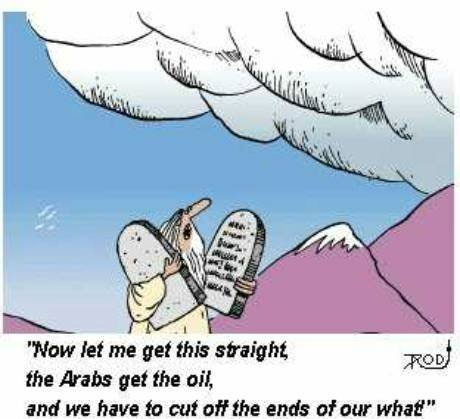

A moyel (aka moel) is a fellow who does circumcisions. Years ago, I attended a bris (a circumcision). At the end of the ceremony, the moyel handed his business card around. It read “Have Scalpel, Will Travel.”

Harry Newton who had a painful weekend after suffering through an apicoectomy on Friday. One of my root canals on a bicuspid had failed and developed an infection. My endodontist, Dr Douglas Kase, cut into my gum, scrapped out the infection and filled the hole with some biocompatible stuff that my body will, hopefully, turn into bone and we’ll save the tooth. Dr Kase also cut both root tips and sealed them. The surgery is pretty gruesome, but Dr. Kase did a brilliant job. I’m a fan. Nice man. He called me twice on the weekend to check on how I was doing. I survived. It’s now Monday. And I’m dutifully swallowing my Amoxicillin antibiotic horse pills which Dr. Kase prescribed.
I wrote prognosticator” in the headline on Friday. I meant “procrastinator.” Idiot me. I was trying to lecture myself to get some things done I’d been delaying on. I got some done over the weekend.

Hopefully this digital currency called Bitcoin will be a viable competitor so that payment network fees such as those from AmEx can be bypassed.
Bitcoin transactions function as if they are made directly from the sender to the recipient so there is no intermediary involved. Compared to AmEx, that means the payment transaction fee is either not necessary or is miniscule compared to the fees that AmEx charges. Currently the fee is about a penny (yes, $0.01) — whether the transaction is worth $1 or $10,000. More importantly, whether or not a travel operator in Botswana wishes to accept bitcoins is up to the travel operator in Botswana and nobody else.
The bitcoins received by the travel operator can then be sent to one of the 40 exchanges who convert bitcoins to and from dollars, euro, yen, etc — there are more than two dozen currencies supported. The Botswana pula (BWN) is not yet exchanged yet though but if the travel operator could accept an international bank wire transfer of USDs from you as a customer, they could have their USDs from the exchange wired in the same manner.
Bitcoin really is a tool that solves a number of problems well. Hopefully you are keeping tabs on this technology. There are some very smart people working on the project who not only are figuring out how we can do without all the payment card networks like AmEx, the same technologies can help us do without a lot of other things that suck money from our pockets — like lawyers.
The banks are certainly not the innocent victims of misguided policies. Neither innocent nor victims. But it's hard not to conclude after a little reading including Barry Rotholtz's excellent and thorough column that government policies and poor regulatory oversight was hugely responsible for the mess, the key factor, including their being in bed with the big banks, encouraging them all alone, being conveniently blind to what was going on, cheering on Fannie May and Freddy Mac, and frequently trading jobs back and forth, and more. Dropping Glass Steagall was really dumb and Greenspan's 1% interest didn't help. More infuriating to this tax payer, if that's possible, was bailing out the banks, after the first maybe necessary wave, and doing so without salary restrictions on them.Banks innocent? No way. But, the big screw-ups were government.
Clarification:
Cash means CASH
not checks or debit cards
Harry – let me get this right. You start by saying “when in doubt stay out” and you highlight the Big Lie article. In that article we correctly are told that because ratnvestments with better and outsized returns. These investors “turned to high yield mortgage backed securities”. So how do you justify your continued recommendation and support for NLY and AGNC. Thats not when in doubt stay out and it certainly looks alot like those who are seeking out higher returns and ignoring the warning signs. These stocks are paying outsized and unsustaibnable dividends (yields)> if it is too good to be true it probably is. All of you sheep are moving into these same REIT's that are playing the same MBS rate spread game. It will end badly. You should follow your own advice.
It's question of allocation. Many people share your opinion. But the fact of a high dividend yield is not necessarily a reason for this to end badly. There are other bigger reasons.If you go back through several columns you'll find a big discussion of them.
Harry, next time around try Microsoft Security Essentials. Free, and widely regarded by the trade press as every bit as good as Norton et al.
It works for me for years now, and has very little if no bloat.
I also like to think that who better to protect the nooks and crannies than the people who know where the skeletons are hidden.
Another great app for the iphone 4 and 4s is the whatsapp. Allows you to instant message others who have the app downloaded.
Excellent annotations to the article. Thanks! That WaPo article wasn't as replete with econo-babble as most, but your annotations were useful and interesting. As an old purveyor of techno-babble, I am always amazed at how some economic commentators hide their meaning (or lack of meaning) behind what is nothing more than slang.
Not accepting AMEX is an old story on Florida's Gold Coast. AMEX wants a bigger % from the retailers and from Lauderdale to Boca they have always refused to ante up.
Remember to ask “How much for cash?”
Ask and sometimes they'll give you a hefty discount.
Re: How much for cash?
Sadly, too few establishments will go for the discount for cash payment.
On daily purchases all I ask for is the rebate amount I get by using my credit card – 1%.
A business would be 2%-4+% ahead on the cash purchase if they gave me the 1% discount.
They simply do not get it. I simply do not understand why not.
Yea Harry— you must mean the same way we all negotiate with contractors like plumbers and electricians.