The market freaked over the Fed’s FOMC remarks. It was disappointed. What did it expect?
“The economy is wonderful. Business is booming. Everybody is employed. Inflation is restrained. Our job is done. Everybody at the Federal Reserve Bank is taking a six-month paid vacation in Jamaica.”
The Fed didn’t say that. It said things are still tough — so tough they require the Fed to keep doing what it’s been doing — printing money, buying bonds and keeping interest rates at nothing.
The “problem” is unemployment. Too many people don’t have a job. The best way to get people back to work is stimulus programs — build roads and bridges. But Washington can’t do that because Congress is focusing on the wrong problem — cutting the deficit, balancing the budget — nstead of putting people to work. You can see how Congress has it all wrong with the Sequester. People lost their jobs, including the FAA’s traffic controllers.
Because the resulting airline delays would inconvenience our entitled members of Congress going home for a week vacation, Congress quickly got together, and passed law to give money to the FAA to put their controllers back to work. Screw doing anything for the remaining unemployed mass of Americans, especially the ones who lost their jobs because of the Sequester and ones who don’t speed up planes.
The Fed’s no-interest rate policy is meant to encourage the banks to lend money to businesses who will use the money to build factories and employ new workers. But that doesn’t work because businesses will only borrow money when they see burgeoning business opportunities — which most don’t see, or already have more than enough money in the bank to invest. It takes a mighty CEO to invest zillions of his company’s precious “rainy day” money when the Fed is telling him growth is “moderate.”
In short, nothing has changed. The economy will continue its slow recovery, buoyed along by the usual stuff — new technology, new businesses, successful entrepreneurs and some pent-up demand — like when the kids living at home at present finally decide to move into their own space.
In short, yesterday’s horrible stockmarket meant nothing — other than “stocks on sale.” It’ll come back quickly and our stocks will continue up. Of that I’m totally confident. If you really want to read the Fed’s FOMC statement (you won’t learn anything), click here.
The banks learn marketing. Well almost. Most banks sell the same “services” to everyone. Intelligent banks have figured some people have more money and want more services — like no charges for incoming wires. Hence, the creation of “private client” banks. Example: Leave $250,000 with Chase Private Client and basically everything is free, including the coffee. Read about Chase Private Client here. Leave more money and you can become a customer of JPMorgan’s Private Client group which is more touchie-feelie. and helps you with your investments and things like your kids’ trusts.
The good news is that my present local bank called Sovereign finally (after ten days) agreed to reimburse me the $315 for the incoming wire fees they’d charged me — $13 a wire, irrespective of how large the wire. Getting the authorization for the $315 refund almost took an act of congress. My local branch manager’s limit is $100. Read that again. A man they’re paying thousands of dollars to run their local branch is capped at $100. What moron set that rule?
Private client groups are a good idea. They have free designer water and really nice furniture. It’s not from Ikea, like Sovereign’s.
Economists are a dour group. In my search for new, intelligent bank, City National Bank invited me to a breakfast yesterday with Austan Goolsbee, ex-chairman of Obama’s Council of Economic Advisers from 2010 to 2011 and now professor of Economics at the University of Chicago Booth School of Business. I won’t even question why a school of business has a professor of economics. Anyway, Goolsbee said “economists are not the most optimistic people.” He said he was “very pessimistic” on Japan (short the yen), and Europe, and China have their problems also.
He’s very optimistic about the U.S. for these reasons:
1. Pent-up demand. Since the recession started, more than 10 million kids are living at home. When they move out, buy homes, furniture and have babies, things will explode.
2. Our demographics. We’re getting old. But everyone is getting a lot older faster than we are.
3. We remain the most productive workforce in the world.
4. Corporate profits have never been higher as a % of GDP. Corporations have oodles of money to invest and grow.
5. Last (and most important). the US is the most entrepreneurial country in the world.
Goolsbee told the story of a German who was starting a business in the U.S. Someone asked him, “Why not Germany?”
He replied “if I described this idea in Germany. everybody will tell me reasons it will fail. Here everyone tells me reasons it will succeed. They tell me to do it. They say, start the business. I can come work for you. We can use my uncle’s garage as the first office.”
Goolsbee warned about government statistics. He warned that looking at individual month statistics was misleading, since they were often revised. The trend is what counted. Gooldsbee didn’t talk about the underground cash economy, which I think is huge and which the government ignores.
Should you sign NDA Agrements? The short answer is NO. An NDA gives the company a weapon to sue you. An NDA confers no benefits on you. If they really expect you to blab or steal their idea, why would they show you in first place?
I argue that I’m honest. And I won’t blab. That usually works and they talk to me. The real reason I won’t sign NDAs is that I’m simply too lazy to read the eight pages of tiny type and figure out what their NDA is actually saying.
Credit cards are booming. I’ve had V (Visa) as a pick for a while. My holdings are up 27% Yesterday Visa reported adjusted earnings per share of $1.92, better than the $1.81 expected by analysts. Credit card usage was up 9 percent year over year in the first quarter, but debit card usage was flat.

Harry Newton who worries about all the expensive liberal education he got his kids and what it’s done to their brains. They’re all become vegetarians. They believe in women’s rights. And they even have gay friends. Worse, on Saturday I caught Claire in the local supermarket asking a clerk for where she could find “organic, free-range tin foil.”
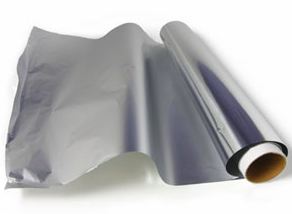
There’s a market for this stuff. Should I tell Alcoa? Should Claire’s college — Bowdoin in Maine — receive royalties from this idea? I bet it was originally their brilliant idea.

Gone all day today enjoying Arizona with friends…had a good chuckle when I saw all the comments. I knew when I read your blog this morning that you had really taken the lid off the box…you didn’t disappoint me…you had! Pandora lives on!
Goolsbee is not a fan of an underground economy, as evidenced by his comment on Bitcoin (which is an enabler of an underground economy):
http://techcrunch.com/2013/04/24/austan_goolsbee-on-bitcoins-usefulness-hahahaha-rotfl/
Jobs come from just two sources. 1. Production or support there of by man to
satisfy their wants and needs and 2. By law.
Guess which source of jobs pays for the other jobs. Hope you said 1. pays for 2. So which do you nurture, support and encourage to prosper? Who do you know that understands this basic concept? This is an augment about economics, a science with laws of nature v. politics, the art of ruling and dealing with man made and man manipulated conventions. Only production creates production. Consumption alone, like
govenment spending does not stimulate output. The best that political power can do to improve production is to maintain a climate of tranquility and protect the people’s rights to their production. The 16th Amendment with direct taxation on income and jobs does violate the people their right to
all of their production and should be repealed.
Tin foil probably ended when the 1940s ended. The “Al” in Alco is for aluminum.
But it’s funny?
It is time to sell when people are ‘totally confident’ that the market will continue to go up
So, sell. I’m not stopping you.
You may be right. Whatever makes you happy.
One of the drawbacks with Chase Private Client is their push towards JPMorgan funds. There was a recent NYTimes front page article about this subject and how the Private Client Managers had JPM fund sales quotas. I am a Chase Private Client customer, but have to say NO, NO, NO (as you always say) to their investment sales pitches. Chase is good for me as my bricks and mortar bank as you can’t walk a NYC block without seeing a branch and/or the Duane Reade Chase ATMs. There is also a Florida branch nearby for the snowbird winters. However, my upstate NY credit union has always been good to me for the past 26 years and I’ve visited a branch 4 or 5 times total. Glenmont branch is probably not too far from the country house. I can email or phone the CapCom President and always receive a prompt reply. She’s a great leader who led the transformation from a telco-dependent credit union to one of the best local financial companies within the Capital Region. They gave me my first car loan when I was making $250/week and I will always be loyal to them.
“The best way to get people back to work is stimulus programs — build roads and bridges.” Oh my God, Harry, the liberal education you gave your children (it will take them years to recover!) is still polluting your brain. The way to build JOBS is to get the government the hell out of the way! Allowing government to control the means of production and to put everyone in “programs” is from the second chapter of Das Kapital. Big government is BAD, Harry. It is bad for business, bad economics, bad for citizens.
Putting everyone in a “program” is the next step toward Marxism designed by Cloward+Piven from the Columbia Univ School of Social Work.. aka the Columbia School of Socialism.
JUST TRY to start a small business serving the public. The healthcare, “equality/diversity”, public access, environmental, and regulatory policies will discourage any entrepreneur. The entrepreneur who knows about free range aluminum foil (as a ludicrous example) has to give up most of the business to some shark (aka “lawyer”) who knows the licensing, regulation, and HR rules.
The stock market that we are making money on is balancing on a knife tip. It is a balloon of thin trading with cheap money and desperate money. It is a bubble divorced from the rest of America where there are fewer jobs for real people every day. If you think we are in a “recovery”, then it is a jobless recovery and that just isn’t a real thing. It’s a shimmering bubble.
I got a kick out of your quote from Mr. Goolsbee.
“3. We remain the most productive workforce in the world.” Except that in many large states the number of people in unemployment and “disability” programs is greater than the number employed.
“4. Corporate profits have never been higher as a % of GDP.” Corporations have oodles of money to invest and grow. Except that much of that money resides overseas. Why did Apple recently BORROW a great deal of money? It didn’t want to bring funds in from overseas and pay double taxation. Are any of those corporate profits creating jobs in the US?
“5. Last (and most important). the US is the most entrepreneurial country in the world.” And the Liberal / Progressives have done EVERYTHING they can to crush that entrepreneurial success. “You didn’t build that!”
Bless you, Frank. I had the same reaction.
I too thought Harry might be slipping on the liberal slope this morning. Stimulus? HA! The “stimulus” since 2009 has added so much debt to the balance sheet we will never get out of it. And we are not creating jobs at all. Anyone who cares about this should go read the last 9 or 10 quarterly update/outlooks from Hoisington Investment management. Van Hoisington and Lacy Hunt have real number showing what is going on. It is all math and the current administration doens’t even know how to use a calculator.
the stimulus is over. has been for several years. the deficit has been shrinking every year since 2009.
http://tinyurl.com/bs8x69y
and most of the current deficit stems from decisions made ten years ago.
http://tinyurl.com/8sfgcm4
Couldn’t agree more. Not only are we getting wasteful spending through the stimulus, we are adding Obamacare to the mix. Congress and the administration are doing well at adding uncertainty to the business environment. they need to get out of the way!
This man is correct, but don’t tell that to a New Yorker, even id he is from Down Under! FDR’s program gave us the longest depression in American history and Pres. Obama is in a close second, despite massive stimulus and money programs. Get the government the hell out of the way and entrepreneurs like Harry once was will create jobs up the yin yang.
Exactly. FDR proved what does NOT work, the WPA, but there are folks who apparently want it brought back. Although, I when I was a kid I did like some of the heroic artwork in the post offices. I guess there was SOMETHING good about the WPA… but nothing economic!
WRB,
I saw on CNBC a congressman that stated that the FAA was fully funded and has no financial reason to furlough anyone. True? I don’t know. But it is obvious that the current administration is using the sequester for political reasons, such as cutting WH tours. The people need to realize that the budget increased over last year and likely, more than the average pay increase we get in the workplace.
We see people choosing to go on government programs, even quitting their jobs. How will this nation be healthy again with a rash of government programs whose goal it is to move our independence from ourselves over to the government.
Now where did I put my Obama phone?
“Funding” in government programs is like 3-card Monte. The “Cure” for the slow down was arguably to move funds from “out year investment” projects and spend it now. The hand is faster than the eye and the sound from the mouth is just a distraction. They are always re-balancing those funds. Much of the FAA “construction” money really goes to environmental studies anyway.
Gov programs and entitlements do nothing to promote growth. A 10 year old with algebra can figure this out. Sorry Harry, but you need to wake up.
Well said. Why work when there is a good free ride.
Last week, the public was enraged by the needless disruption in air traffic. People created websites, made calls and sent email to Congress and the White House, and launched an attack on Democrats and Republicans alike. In one week, the wrath of the American citizenry created a necessary and successful change in policy. It demonstrated that angry American voters can coalesce around an issue when their anger reaches the boiling point and they set aside partisan politics. They said to their elected representatives, “You, Senator and Congressman [not “Democrat” or “Republican”] are responsible for poor governance.”
It took a week of pain. It cost the US economy billions of dollars. It cost operating businesses time and money and discouraged them from investing and hiring – and this particular disruption only lasted a week. Now, imagine the ongoing effects of sequestration on the rest of the federal government.
Keeping in mind the Federal Aviation Administration (FAA) experience, let’s speculate a little about other potential trouble going forward – particularly the sort of trouble that could be made worse by the federal government’s failure to allow departments to prioritize, as we saw last week.
Will the next crisis take the form of a public-health disaster? Are we going to see a lack of sufficient preparation in case H7N9 bird flu mutates and emerges as a pandemic?
We have a rapidly mutating and very troubling flu virus spreading in the world. There are over 100 confirmed human cases. One out of every five cases has resulted in death, and almost all other reported cases have been hospitalized, with most remaining seriously ill. Only a handful have walked out of the hospital fully cured. Are we now missing information about this risk because of sequestration?
Or will the next crisis happen due to inadequate care for the poor and elderly? Will it instead result from inadequate flood control on our rivers or perhaps from cutbacks to the National Oceanic and Atmospheric Association’s (NOAA) national weather forecasting services? Will the next big failure occur because the Food and Drug Administration (FDA) can no longer adequately oversee the safety of our food, or will it be a deadly disaster that could have been prevented had there not been a falloff in bridge and rail-safety inspections?
Or is there another major issue that will emerge, take center stage, and then trigger rage once more because we citizens will not be content with the quality of our governance? If so, then we will again light up the White House switchboard; email Senators and Congressman, call them on the phone, and send them telegrams; and launch another round of hot-issue websites.
In place of “Don’t Ground America,” the website might be “Don’t Sicken America” or “Don’t Starve America” or “Protect America” or “Make America Safe and Secure Against Terrorist Attacks” – or something else.
From where we sit, a milestone has been reached in the US: citizen anger rose to the point of reaction. Americans are very slow to anger. We tolerate awful governance in Washington. We go on about our business and act as though we cannot do anything about the problem. Over half of us give up and don’t vote. But once angered, the citizens of the US have the capacity to take their country back. And we did it last week.
Now we have to do it again, or we’ll soon lapse back to divisive partisan politics, finger pointing by Democrats at Republicans and by Republicans at Democrats, finger pointing by the White House at the Congress and by Congress at the White House. America, if the finger pointing continues, I hope we will inflict more wrath on our Senators and Congressmen, both Democrats and Republicans – the men and women who we elected to represent us in Washington.
Meanwhile, markets are facing a slowdown in 2Q2013. Worldwide, statistics are trending in favor of a slowdown. Incomes are rising, but very slowly. The corporate-profit share is very wide, but it may have peaked. The labor-income share, on the other hand, is very low, and it may be bottoming. Each shock delivered by Washington sets back the process of recovery, whittles the growth rate and jobs, and extends the period in which interest rates will remain near zero according to the central banks of the developed world.
This trend is bullish for stocks and other asset classes. Low interest rates, very low growth, and no inflation pressure create rising prices for assets of all types.
In the longer run, this is a terribly unhealthy circumstance, and our longer-term outlook deteriorates progressively as our Washington politicians continue their disjointed puppets’ dance.
From a strategic point of view, we remain fully invested. We are back and fully invested in the US stock market and have been participating in the rally. There was a temporary respite during which we raised some cash that has now been redeployed.
On the bond side, we expect interest rates to remain low for an extended period. We are gradually transitioning accounts in preparation for rising interest rates, although we do not expect to see them this year and perhaps not for another 2-4 years. The timing of the interest-rate shift makes future strategic moves is impossible to determine. We continue to gradually phase in hedged accounts in order to protect against long-term interest-rate risk.
We watch and worry about Washington. And we worry about our country.
David R. Kotok, Chairman and Chief Investment Officer
Your government at work. Ugg!